By the Deb Paton Showley Group
If you spend your summers shuttling between the dock and the driveway, you already know the toll that lake living takes on an entryway. Wet swimsuits, sandy shoes, fishing gear, and life jackets do not belong in your main living space, but without the right setup, they end up there anyway. A well-designed mudroom solves this problem before it starts, giving your household a dedicated place to transition from lake to home without dragging the lake in behind you.
For homeowners around Lake Wawasee, Lake Tippecanoe, and Winona Lake, a mudroom is not a luxury add-on. It is one of the most functional spaces you can build into a lake property, and it directly affects how much you enjoy the season. When your gear has a home, your house stays cleaner, your mornings move faster, and your weekends feel less like cleanup duty and more like actual relaxation.
In this guide, we will walk through what makes a mudroom work for lake life, from flooring choices that can handle constant moisture to storage systems built for the volume of gear a lake property demands. Whether you are renovating an existing entry or planning new construction on the water, these principles will help you design a space that keeps up with your lifestyle.
Key Takeaways
- Choose flooring that resists water damage and is easy to clean after a day on the lake.
- Design storage by activity, with separate zones for wet gear, dry gear, and everyday items.
- Add a bench and boot tray combination near the entry to manage muddy or wet footwear.
- Incorporate ventilation to prevent moisture buildup and musty conditions over time.
- Plan for seasonal rotation, so the space works as hard in winter as it does in July.
Choosing Flooring That Can Handle Lake Life
The flooring in your mudroom takes more damage than almost any other surface in your home. Between wet feet, sandy shoes, and dripping towels, this space needs a floor that can handle daily exposure to moisture without warping, staining, or becoming a slip hazard. This is one area where it pays to think practically first and aesthetically second, though the good news is that many durable options also look great.
Porcelain tile is a popular choice for lake homes, since it resists water absorption almost entirely and holds up well to sand and grit. Luxury vinyl plank has also become a favorite among lake homeowners, as it mimics the look of hardwood while standing up to moisture in a way that real wood cannot. Whatever you choose, make sure the surface has enough texture or slip resistance built in, since a wet mudroom floor can become dangerous quickly if it is too smooth.
Beyond material selection, consider how the flooring transitions into the rest of your home. A slightly recessed mudroom floor, even by half an inch, can help contain water and sand so that it does not migrate into adjoining rooms. Adding a floor drain is worth discussing with your builder if you are working on new construction, since it gives you an easy way to hose down the space during the busiest parts of the season.
What To Look For In Mudroom Flooring
- Water-resistant materials, such as porcelain tile or luxury vinyl plank, that will not warp or stain over time.
- Slip-resistant texture that stays safe even when wet.
- A slightly recessed floor level or floor drain to help contain water and sand.
- Easy-to-clean grout lines or seamless flooring options that do not trap debris.
- Durable finishes that can withstand sand, gravel, and repeated foot traffic.
Designing Storage Zones by Activity
The biggest mistake homeowners make with mudroom design is treating it as one general storage area instead of a series of purpose-built zones. Lake life generates a wide variety of gear, and each type has different storage needs. Life jackets need to dry before they are put away. Fishing rods need vertical space. Beach towels need airflow. When you design your mudroom around these distinct categories, everything finds its place instead of piling up on a bench or the floor.
Start by mapping out what your household actually uses each week during peak season. Most lake homes need a wet zone near the entry for dripping items, a dry storage zone for shoes and bags that are ready to be put away, and an everyday zone for items like keys, sunglasses, and sunscreen that get grabbed on the way out the door. Separating these functions, even within a modest footprint, makes a dramatic difference in how usable the space feels day to day.
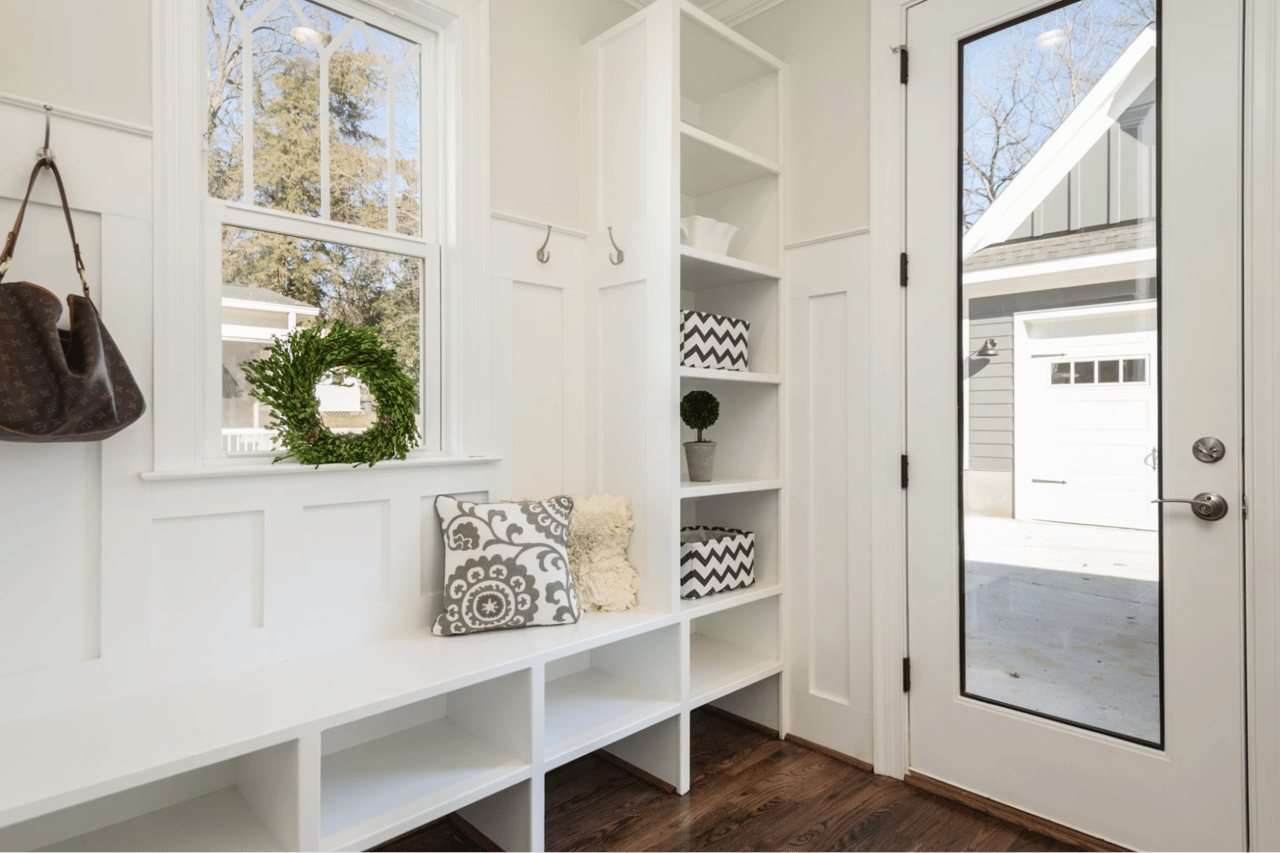
Open shelving, hooks, and labeled bins tend to work better in a lake mudroom than closed cabinetry alone, since they let gear breathe and dry properly. Vertical storage is especially valuable here, as it keeps paddles, poles, and float toys off the floor without eating into your square footage.
How To Zone Your Mudroom Effectively
- Create a wet zone near the door for dripping suits, towels, and life jackets.
- Add a dry zone with cubbies or bins for shoes and bags once they are ready to be stored.
- Include an everyday zone with hooks for keys, sunglasses, and bags used daily.
- Use vertical storage, such as wall-mounted racks, for paddles, poles, and long gear.
- Label bins by household member or activity to keep the system easy to maintain.
Building In Ventilation and Moisture Control
A mudroom that constantly holds wet gear needs a plan for moving that moisture out of the space, or you will end up dealing with musty conditions, no matter how nice the finishes are. Ventilation is one of the most overlooked elements of mudroom design, and it is also one of the easiest to solve if you address it early in the planning process.
A window that opens, even a small one, makes a significant difference in a lake mudroom. If natural ventilation is not possible due to the layout of your home, an exhaust fan tied to a humidity sensor can automatically manage moisture levels without you having to think about it. This is particularly useful during the height of summer, when the space may see multiple rounds of wet gear coming through in a single day.
Material choices also play a role in moisture control. Cabinetry made from moisture-resistant materials, such as marine-grade plywood, holds up far better than standard particleboard in a space that deals with consistent humidity. Open-slat shelving allows air to circulate around stored items, which helps everything dry faster and reduces the chance of mildew developing on gear that gets put away before it is fully dry.
Ventilation Features Worth Considering
- An operable window to allow natural airflow through the space.
- An exhaust fan with a humidity sensor for automatic moisture control.
- Moisture-resistant cabinetry materials, such as marine-grade plywood.
- Open-slat shelving that lets air circulate around stored gear.
- A dehumidifier for larger mudrooms that see heavy daily use.
Planning for Year-Round Functionality
While the busiest months at the lake tend to be the driving force behind a mudroom renovation, the best designs work just as well in January as they do in July. Thinking through how the space transitions between seasons will help you get more value out of the investment and keep the room from feeling like a single-purpose space for only part of the year.
In the off-season, your mudroom needs to handle boots, coats, and cold-weather gear instead of swim gear and paddleboards. A flexible storage system, with adjustable shelving and modular bins, allows the space to shift easily between these two very different sets of needs. Built-in bench seating with storage underneath is particularly useful year-round, since it gives you a spot to put on boots in winter and rinse off feet in summer, all from the same piece of furniture.
Lighting also deserves consideration for year-round use. A mudroom that only gets natural light during long summer days can feel dark and uninviting once the season changes. Layering in overhead lighting along with task lighting near benches or hooks ensures the space stays functional and welcoming, no matter the time of year.
Ideas To Keep Your Mudroom Useful All Year
- Choose adjustable shelving and modular bins that can shift with seasonal gear.
- Add a built-in bench with storage underneath for boots, shoes, and towels alike.
- Layer in overhead and task lighting so the space works well beyond daylight hours.
- Include a boot tray or drainage mat for winter slush and summer sand alike.
- Keep a rotating bin system so off-season gear stays out of the way without leaving the house.
FAQs
How Big Should A Lake House Mudroom Be?
The right size depends on your household and how much gear you typically manage each season, but most lake homes benefit from at least sixty to eighty square feet of dedicated mudroom space. This allows enough room for a bench, storage cubbies, and walking space without feeling cramped, especially when multiple people are coming and going after a day on the water.
What Is The Best Flooring For A Wet Mudroom?
Porcelain tile and luxury vinyl plank are both excellent choices, since they resist water absorption and stand up to sand and grit without warping. Look for options with slip-resistant texture to keep the space safe when floors are wet, which is common in a lake household during peak season.
How Do I Keep My Mudroom From Smelling Musty?
Consistent ventilation is the key factor, whether that comes from an operable window, an exhaust fan, or open-slat shelving that allows gear to dry fully before it is stored away. Moisture-resistant materials in your cabinetry also help prevent the buildup that leads to musty conditions over time.
Can A Small Entryway Still Function As A Lake Mudroom?
Yes, and vertical storage is your best tool in a smaller footprint. Wall-mounted hooks, narrow cubbies, and stacked shelving allow you to organize gear by zone even when square footage is limited, so the space can still handle the demands of lake life without requiring a full addition.
Bring Your Lake Lifestyle Home
A mudroom built around how you actually live at the lake changes the entire rhythm of your household, turning a source of daily clutter into one of the most functional rooms in the house. When storage, flooring, and ventilation are all designed with intention, the space works with your lifestyle instead of against it, season after season.
Whether you are preparing to sell a property around Lake Wawasee, Lake Tippecanoe, or Winona Lake, or if you are searching for a home where this kind of thoughtful design is already in place, these are the details that make a real difference in daily living. Buyers in this market consistently look for homes that understand the demands of lake life, and a well-designed mudroom is a feature that speaks directly to that need.
Reach out to our team at the Deb Paton Showley Group, and let us help you find or design a space that truly works for your lake lifestyle.