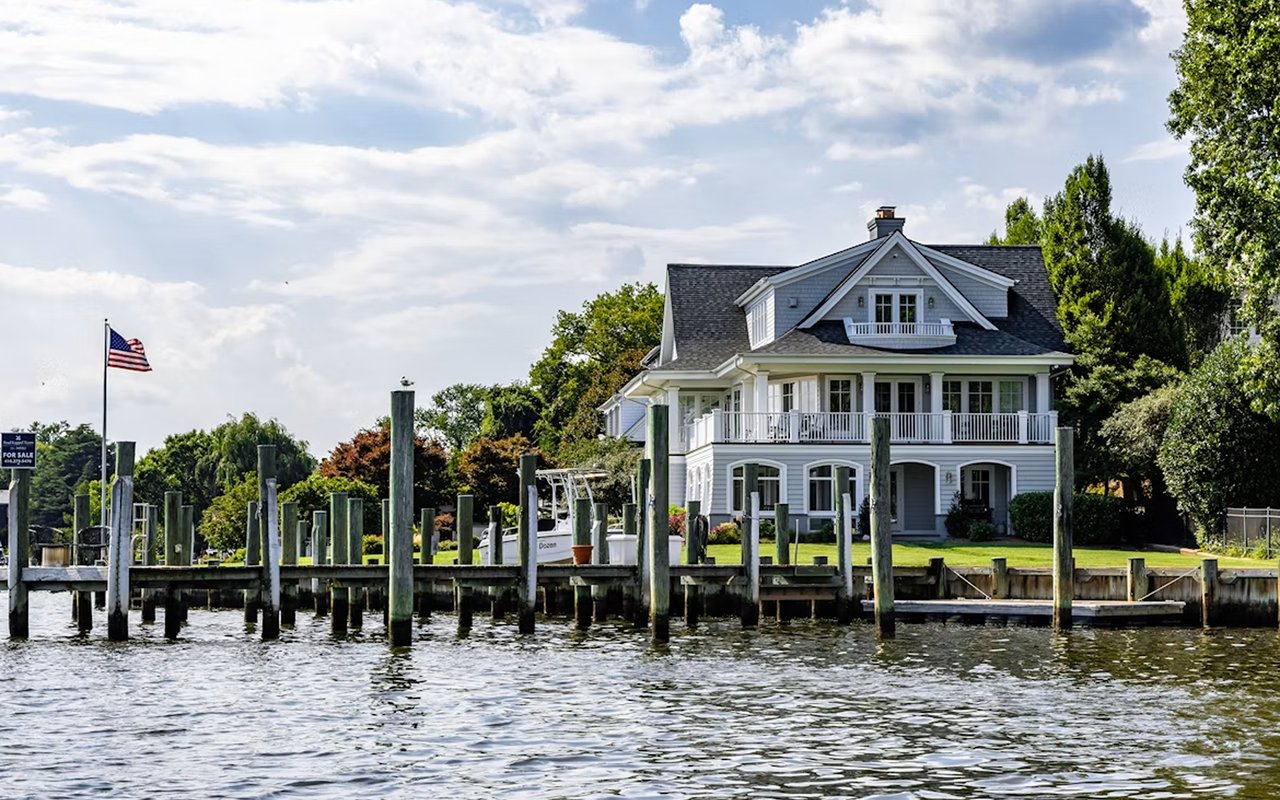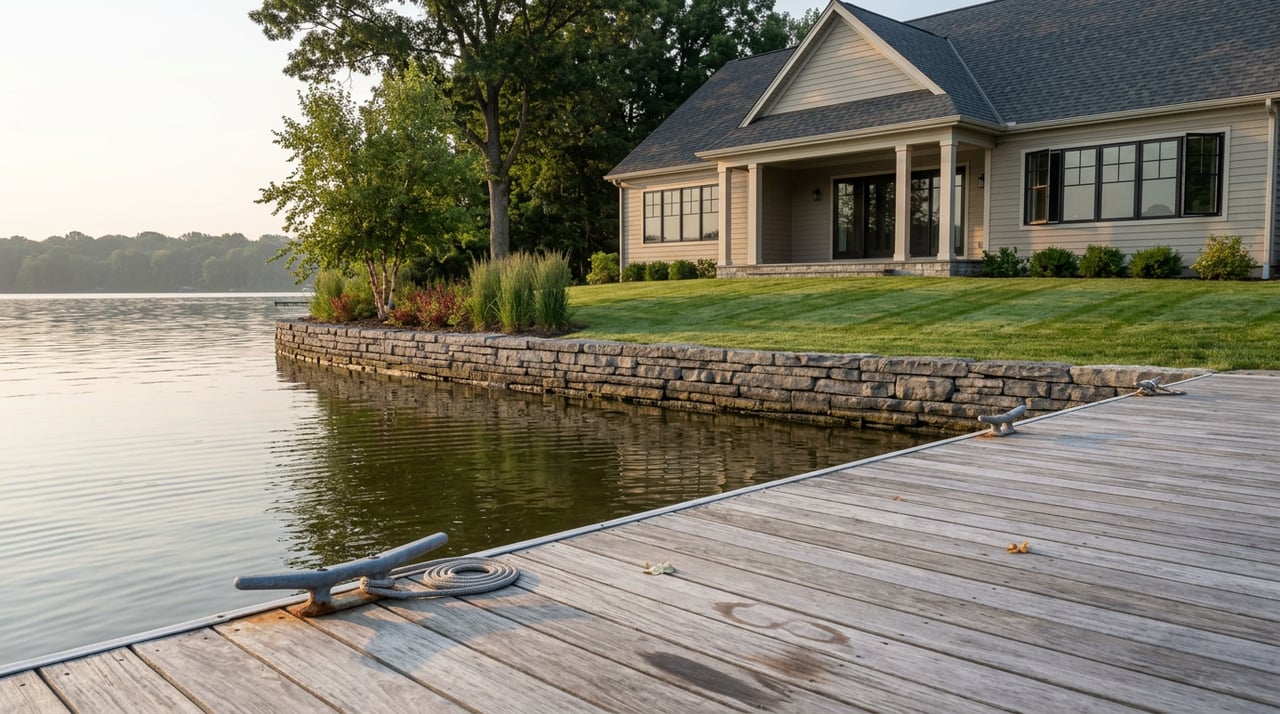
A buyer walks a dock on the Wawasee side of Syracuse for the first time, already worried about the wrong thing. They've heard lake stories about septic systems, about the smell that shows up at closing, about the inspection that stalls everything. So that's where their attention goes. Meanwhile the dock they're standing on, the seawall holding the bank in place, and the boat well tucked into the shoreline are the parts of the property that actually answer to a state agency.
That reversal is the thing worth understanding before you write an offer on Wawasee or Syracuse Lake. The visible structures, the ones a buyer can photograph from a boat, sit inside one of the more deliberate permitting frameworks in Indiana water law. The invisible ones, the septic tank and the well, are governed mostly by what the seller is willing to say on a form.
What actually needs a state sign-off
Any construction below the normal water level of Lake Wawasee or Syracuse Lake, or within 10 feet landward of the shoreline, falls under Indiana's Lake Preservation Act. New or reface seawalls, dredging, boat ramps, and boat well construction all require prior approval from the Indiana DNR's Division of Water before a shovel goes in the ground. That's not a local zoning courtesy. It's a state statute, and the DNR reviews the application before work starts, not after.
Some Lake Preservation Act projects can qualify for a General License, a faster review track than the standard permit application, but not every seawall reface or boat well repair automatically fits that category. That's a meaningful difference from a typical home renovation timeline, where the contractor just needs a local building permit. If you're buying a Wawasee property with plans to rebuild a failing seawall or add a boat well, confirming which review track your project falls into is worth doing before you're locked into a closing date, not after.
The Lake Wawasee Property Owners Association layers its own system on top of the state framework. WPOA created and manages a lake-wide pier numbering program, giving first responders an exact location during an emergency. If you're buying a property with an existing dock, confirming that the pier is numbered and that the numbering transfers with the sale is a small task that belongs on your closing checklist, not an afterthought.
What doesn't require an inspection at all
Here's where the assumption runs the other direction. Buyers coming from lake markets in states like Michigan, where Redfin's migration data shows Chicago is the single largest source of inbound home searches for Syracuse, often arrive expecting a mandatory septic inspection at the point of sale. Counties like Chisago in Minnesota or several Michigan counties near their own lake country do require exactly that: a certified inspection before the deed transfers, with real teeth if the system fails.
Kosciusko County does not run that program. The county's health department requires a permit for any new septic or well installation, and for any repair to an existing system, but there is no confirmed countywide ordinance requiring an inspection simply because a property is changing hands. What Indiana law does require is disclosure. Sellers complete the Indiana Residential Real Estate Sales Disclosure, the state form required under Indiana Code 32-21-5, and that form asks directly about the condition of sewer, water, and septic systems the seller knows about.
Disclosure and inspection are not the same protection. Indiana courts have leaned toward buyer-beware in several appellate decisions interpreting this exact form, finding that a buyer who had a reasonable chance to inspect a property couldn't later claim they were entitled to rely solely on what the seller wrote down. In other words, the form tells you what the seller is willing to admit. It doesn't tell you what a licensed inspector would find. If you're buying on Wawasee and nobody has looked at the septic tank in years, an independent inspection before you're locked into a closing date is the only way to actually know what you're getting, disclosure form or not.
Why the shoreline carries the harder paperwork
The asymmetry makes more sense once you see what each system is protecting against. A failing septic system is a private problem that shows up gradually and mostly affects the one household on top of it. A seawall built without engineering review, or a boat well dredged without regard to lake bottom contours, affects water flow and shoreline stability for every property along that stretch of Wawasee. The state's permitting bar is set where the shared risk is highest.
That's also why the Wawasee Area Conservancy Foundation exists as a separate, parallel effort from WPOA. Formed in 1991 at WPOA's own suggestion, WACF has protected more than 1,000 acres and over 10 miles of shoreline within the watershed, funded through grants and community support that have topped a million dollars for erosion control and water quality work. None of that activity replaces the DNR permit process. It sits alongside it, focused on the cumulative health of the watershed rather than any single parcel's paperwork.
The regulatory moment that makes this worth knowing right now
Two things happened on Indiana's lakes this year that are worth knowing if you're actively comparing waterfront listings in the county.
In early April 2026, the DNR placed a boating restriction on Lake Wawasee, along with the Barbee Lakes Chain and the Tippecanoe Lake Chain, asking boaters to stay at idle speed because surface water conditions were high enough that wake could reach homes. By late April, the DNR lifted the restriction on Wawasee specifically, after water levels dropped to a safe level, while the Barbee and Tippecanoe chains stayed under restriction. That's not a footnote. It's a working example of how lake-specific conditions in Kosciusko County get monitored and adjusted independently, even among lakes that sit a few miles apart. If you're weighing a Wawasee property against one on the Barbee chain, don't assume the same conditions apply to both just because they're in the same county.
Second, a new statewide rule took effect July 1, 2026: wake surfing is now prohibited between sunset and sunrise on Indiana's public freshwater lakes, with additional restriction on lakes of 299 acres or less that carry a 10 mph speed limit. Wawasee, at roughly 3,000 acres, isn't in the smaller-lake category, but the sunset-to-sunrise rule still applies. If part of your interest in a lakefront purchase includes evening boat time with a wake-sport boat, that's a real constraint to factor into how you picture a summer evening on the water, not a hypothetical one.
What this means for your closing timeline
If shoreline work is part of your plan, budget real time for it. A Lake Preservation Act permit application is not always a same-season project, and whether your seawall or boat well qualifies for the faster General License track or the standard review isn't something to guess at. Start the conversation with the DNR's Division of Water before you're under contract, not after.
If you're buying and the septic or well hasn't been independently inspected recently, treat that as your responsibility, not the seller's. The disclosure form tells you what's known. It doesn't tell you what hasn't been checked.
If you're selling, gather your pumping receipts, permit copies, and any repair history before you list. Kosciusko County's septic and well permit records are part of the paper trail, and having them organized speeds up the conversation with a buyer's inspector considerably.
And if a dock, seawall, or boat well came with the property, confirm its permit history and its WPOA pier number before closing. A structure without a clean permit trail becomes the new owner's problem the day the deed transfers.
FAQ
Does Kosciusko County require a septic inspection before I can sell my Wawasee property? No countywide ordinance mandates one. The county requires permits for new installations and repairs, and Indiana state law requires seller disclosure of known problems, but there is no automatic inspection requirement tied to the sale itself.
Can I rebuild a seawall on Lake Wawasee without a permit? No. Any new or reface seawall, along with dredging or boat well construction below the shoreline elevation, requires prior approval from the Indiana DNR's Division of Water under the Lake Preservation Act.
Is the boating restriction still in place on Lake Wawasee? The restriction placed in early April 2026 was lifted for Wawasee by late April 2026 after water levels dropped. Restrictions on other Kosciusko County lake chains have followed their own separate timelines, so current status should always be confirmed directly with the DNR before you plan around it.
Buying or selling on Lake Wawasee comes with more moving parts than a standard residential transaction, and most of them aren't obvious until you're already under contract. If you want a clear read on what a specific Wawasee or Syracuse Lake property actually requires before closing, the Deb Paton Showley Group can walk you through it property by property. Find Your Dream Home.