By the Deb Paton-Showley Group
Lake Wawasee is Indiana's largest natural lake, and buying a home on its shores works a little differently than buying anywhere else in Kosciusko County. Between channel frontage, pier regulations, and water clarity that ranks among the best in the state, there's far more to weigh than square footage and a pretty view. With decades of combined experience on these lakes, here's what we walk every waterfront buyer through before they make an offer.
Key Takeaways
- Not all "waterfront" on Wawasee is equal, and the type of frontage shapes both price and lifestyle.
- Piers, seawalls, and dredging on the lake are regulated by the Indiana DNR.
- Water depth, boating rules, and shoreline features vary widely by location.
- Systems like septic, water, and insurance deserve as much attention as the house itself.
Know the Difference Between Lakefront, Channel, and Access
The word "waterfront" covers several very different situations on Lake Wawasee, and understanding them is the first step to setting a realistic budget. A home with open-water frontage lives differently than one tucked on a channel, and both differ from a property with deeded access.
The Main Types of Waterfront
- Open-water lakefront offers direct frontage, the widest views, and the highest prices on the lake.
- Channel-front homes provide protected dockage and a short boat ride to open water, often at a more attainable price.
- Deeded or association access gives you a place to keep a boat without private frontage, usually through a shared pier.
- Frontage is measured in feet, and that number dictates how much pier space and boat room you actually have.
Understand Piers, Seawalls, and the Lake Preservation Act
Because Lake Wawasee is a public freshwater lake, what you can build along the shoreline is governed by the Indiana Department of Natural Resources under the Lake Preservation Act. This surprises a lot of first-time lake buyers, so we make sure it's clear before closing.
What to Check on the Shoreline
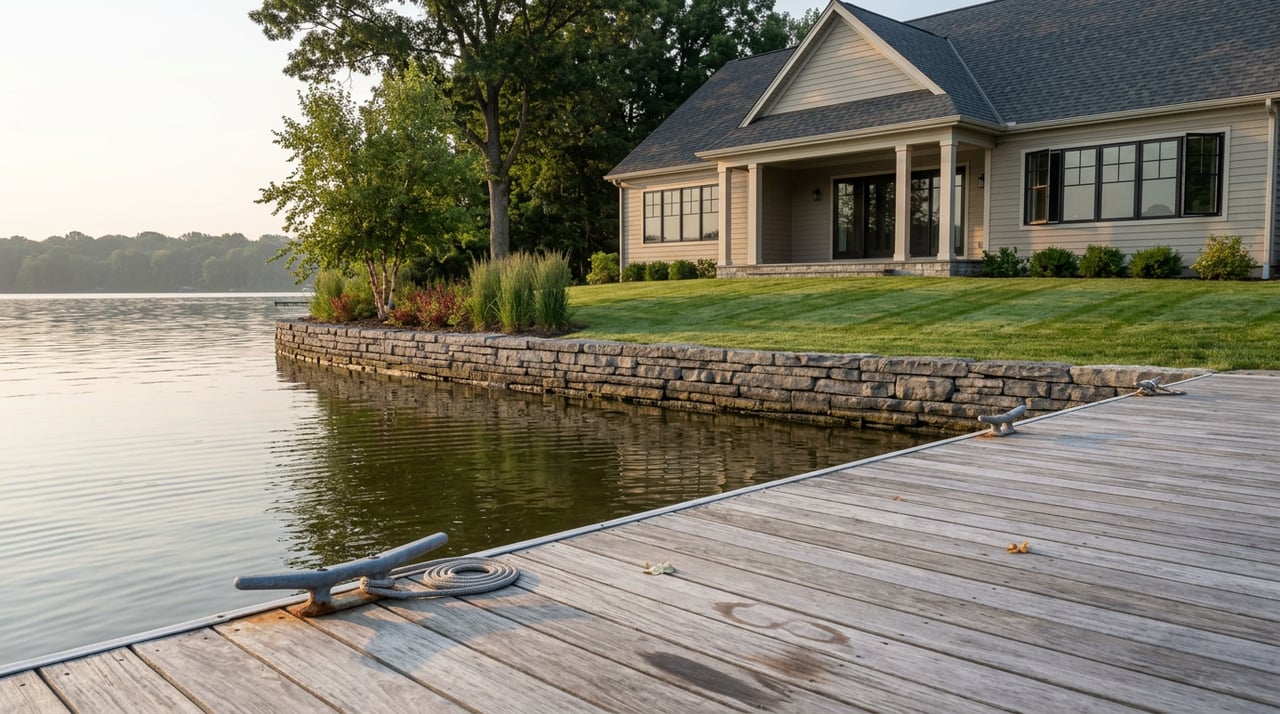
- Seawalls, dredging, boat ramps, and boat wells generally require DNR Division of Water approval, though some qualify for a general license.
- Pier length and placement follow DNR rules and need to respect your neighbors' space on the water.
- Many Wawasee piers are seasonal and temporary, so ask who installs and removes them each year.
- Confirm that any existing seawall, pier, or dredged area was properly permitted before you take ownership.
Factor In Water Depth, Ecozones, and Boating
How you'll actually use the water depends heavily on where the home sits. Two properties a few hundred feet apart can offer completely different boating experiences, so we always look at the water as closely as the house.
Location-Specific Considerations
- Check the water depth at the shoreline against your boat's draft, since some channels are shallow and may need dredging.
- Note the "Idle Only" ecozones marked by buoys, where motorized boats are restricted to protect the shallows.
- Consider how close you are to open-water traffic and the lake's popular gathering spots.
- Think about sun orientation and prevailing wind, which affect everything from your dock to your evenings outside.
Look Beyond the House Itself
Waterfront ownership comes with a few systems and community pieces that are easy to overlook when you're focused on the view. These details can meaningfully affect your costs and your enjoyment.
Easy to Miss, Important to Know
- Confirm whether the home is on septic or sewer and on a private well or municipal water, as many older lake homes are on septic.
- Understand membership and dues for the Wawasee Property Owners Association and the Wawasee Area Conservancy Foundation, which fund lake patrol and water-quality work.
- Review the flood zone designation and get a clear picture of waterfront insurance costs.
- Ask whether the home is winterized for year-round living or built mainly for seasonal use.
FAQs
Is a channel home as good as a lakefront home on Wawasee?
It depends on your priorities. Channel homes offer protected dockage and a lower entry point, while open-water lakefront commands a premium for its wide views and direct access, so we help buyers weigh the trade-offs against their budget and how they plan to use the lake.
Do I need a permit to add or replace a pier or seawall?
Very likely. Shoreline work on a public lake like Wawasee is regulated by the Indiana DNR under the Lake Preservation Act, and we help buyers confirm what's allowed and what's already permitted before they close.
How is the water quality on Lake Wawasee?
It's among the best in Indiana. Summer clarity often reaches 12 to 15 feet, and the lake is monitored regularly by the Lilly Center for Lakes and Streams at Grace College, which is part of what keeps waterfront values here so strong.
Work With the Deb Paton-Showley Group Today
Buying on Lake Wawasee is one of the most rewarding moves you can make in northern Indiana, and it's one we know intimately after more than 40 years of combined experience across the Kosciusko County lakes. We'd love to help you find the right frontage, the right home, and the right fit for how you want to spend your time on the water.
If you're thinking about buying a waterfront home on Lake Wawasee, reach out to us at the Deb Paton-Showley Group, and let's find your place on the lake.
If you're thinking about buying a waterfront home on Lake Wawasee, reach out to us at the Deb Paton-Showley Group, and let's find your place on the lake.